

No Compromise on Your Choice of Floor
Enjoy all the benefits of underfloor heating without changing your choice of preferred floor coverings. Warmset’s gentle yet powerful system seamlessly adapts to everything from timber to tiles, so you never have to compromise on style inside or outside your home (yes, including external decks!).
Our dedicated technical team collaborates closely with you to tailor the perfect solution for your project’s unique requirements. Whether you select from our readily available stock in South Australia or opt for a custom configuration from our Italian manufacturing plant—at no extra cost—at Warmset Australia we ensure you get exactly the ideal combination of wattage and mat length for comfortable, sustainable heating in projects big or small.

In-Screed
Ideal for larger areas and for versatile applications.
Under Tile
Ideal for smaller areas, such as bathrooms, for super quick heat up/cold down times.
Under Engineered Timber
Nothing beats the timeless beauty of a gently warmed up timber floor
Under Floating Floors
Perfect for living areas, preserving elegance and comfort, while working gently.
Under Carpet
Invisible comfort for bedrooms and lounges.
A Seamless Fit for Any Flooring Surface


Heating Cost Simulator: How Much Underfloor Heating Systems Cost to Run?
- Estimate your heating costs instantly with our easy-to-use Heating Cost Simulator—helping you make smarter, more energy-efficient choices.
Insulation
How to pick the correct insulation level? Follow these guidelines:
- Very low insulation: below 5 stars rating
- Average insulation: 5 – 6 stars rating
- High insulation:7+ stars (near passive or similar
How to determine the correct estimated wattage? Follow these guidelines:
- Very low insulation: 150W
- Average insulation: 100W (120-150W for bathrooms)
- High insulation: 65W to 75W (100-120W for bathrooms)
Climate zones
- Zone 4 & 5: Hot/dry summer, cool to cold winters (Ex. Adelaide, Sydney)
- Zone 6 & 7: Mild to cool temperate (Ex. inland VIC, inland Southern SA, inland NSW)
- Zone 8: Regions with snowfalls
Disclaimer
These calculations reflect Warmset’s typical usage scenarios and construction site experiences. They are provided solely for illustrative purposes and do not represent a scientific standard or a binding commitment by Warmset or Warmset Australia. Actual running costs will vary depending on specific installation parameters, level of insulation, floor type, solar power connection, and heat loss factors of the specific building. This approximation does not imply any warranty or guarantee of energy consumption and/or electricity costs.
Explore Our Video Gallery
Explore Our Image Gallery


Learn From Our Case Studies

Residential project: A builder’s perspective
Whole-home far infrared underfloor heating in premium inner Melbourne residence.
A seven-star, all-electric Melbourne residence heated at 75 W/m² across timber, tile and carpet — in the builder’s own words.

St Dominic’s Church, Camberwell VIC: cutting heating costs by over 50%
Faced with an ageing, costly and ineffective electric heating system, St Dominic’s Parish and Priory Church in Camberwell, Victoria, needed a better way to keep parishioners comfortable during functions without attempting to heat the entire volume of its large, high-ceiling interior.
Warmset Australia designed and delivered a zoned far-infrared underfloor heating solution beneath a new floating laminate floor. The project was completed and commissioned in June 2026.
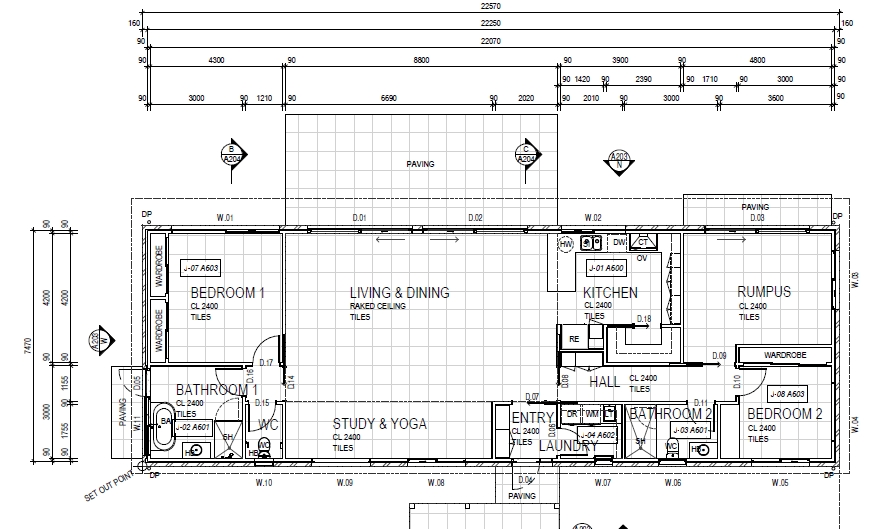
How This Regional Victoria Home Runs on Just 65 W/m² with Warmset
Our client in regional Victoria was building their retirement home with comfort, sustainability, and energy performance in mind. Underfloor heating was a clear consideration, and the client wanted a solution that was modern, zero maintenance, and energy efficient.

ELC “Sant’Antonio” transitions from hydronic to Warmset saving 18% on their heating bill.
The case study describes energy efficiency interventions undertaken by the town of San Martino Buon Albergo (Verona) in 2014. The initiatives focused on improving comfort levels, streamlining management, and reducing energy consumption and costs in public buildings and pre-school centres.

Large Council slashes heating costs by 56% thanks to Warmset
Comprehensive energy efficiency initiative aimed at improving the working environments, infrastructure, and heating costs of 18 public buildings in the town leads to 56% reduction in heating bill.
Debunking Myths About Underfloor Heating
Myth: Warmset underfloor heating is a luxury product
Reality: As with any product, there are many underfloor heating (UFH) brands on the market, each with its own price range and performance level. Warmset is considered a premium option because of its advanced technology and innovative use of high-quality materials. It is ethically and entirely made in Italy, which influences its production cost. By contrast, most UFH brands are produced in China or India, or partially assembled in Europe using imported components.
We don’t consider Warmset a “luxury” product but rather a smart long-term investment. Its energy efficiency and zero-maintenance design mean lower running costs over time. Compared with forced-air and hydronic systems, Warmset is cost-competitive because it never requires maintenance or replacement parts.
Myth: Warmset is expensive to install
Reality: Warmset comes in pre-assembled heating mats, eliminating the need for on-site assembly. This cuts down installation time, labour costs, and the risk of human error—simply roll out the mats according to the layout. Some other electric UFH systems do require on-site assembly, increasing both costs and complexity. Recently, most electric UFH brands in Australia have begun offering pre-assembled mats (particularly for DIY projects), making electric UFH installation much faster than traditional or hydronic systems.
Myth: Electric underfloor heating is expensive to run, so Warmset must also be costly
Reality: Electric underfloor heating in Australia once had a poor reputation due to cheaper products and loose regulations. Fortunately, modern, high-quality electric systems are now much more efficient than ducted or split air systems. Warmset stands apart thanks to its unique 17 mm-wide, flat heating element made of highly conductive and durable materials (such as carbon fiber, aluminum, nickel, and silver). This design delivers far-infrared (FIR) heating that radiates through the floor and evenly warms the entire room.
In contrast, most electric cable UFH systems use a thin copper cable (typically less than 2 mm), and generate heat predominantly via convection. Although these can be effective, Warmset’s globally patented design and advanced materials enable far superior heating efficiency and comfort.
Myth: Electric UFH takes too long to heat the room
Reality: Underfloor heating works differently from forced-air systems. While there can be a slightly longer initial warm-up period compared to “instant hot air,” underfloor heating maintains a consistent temperature longer. Forced-air systems push hot air upward, where it cools quickly—often in just minutes—requiring frequent temperature adjustments and therefore higher energy consumption.
Among electric UFH solutions, Warmset has been shown in controlled lab testing to have one of the fastest heat-up times for both floors and rooms, all with minimal temperature variance. Because Warmset emits far-infrared heat, the warmth is retained in the floor, walls, and objects, which then gradually release it back into the room. Additionally, the heating strips are wider and placed closer together, providing greater thermal coverage.
Myth: UFH can only be installed in new builds
Reality: Warmset can be retrofitted in existing buildings by laying it directly over the current floor. At just 1-5 mm thick, it fits easily under most new flooring materials without requiring expensive demolition of the old floor.
Myth: Warmset can only be installed under tiles and in screed
Reality: Warmset has been installed successfully under tiles, stone, wood, vinyl, polished concrete, and carpet for nearly 15 years. It’s even used under bitumen, on roofs, and beneath grass in freezing climates to melt snow or ice. Installation techniques vary depending on the floor type, but Warmset can be placed under tile adhesive, screed, in-slab, cement, or floating boards.
Myth: The best UFH application is hydronic in-slab
Reality: Despite its popularity in some regions, in-slab heating is now considered one of the least efficient underfloor heating methods. It has largely been phased out in Europe in favor of more responsive systems. Some architects and builders in Australia still advocate for in-slab heating based on the concept of thermal mass—the ability of concrete to store and slowly release heat. However, with modern, on-demand technology like Warmset, there’s no need to rely on thermal mass. On milder winter days, it can actually become inconvenient because the slab may continue radiating unwanted heat.
For any contemporary UFH system, placing the heating element as close as possible to the floor surface is more efficient. In-screed, under-tile, and under-wood installations heat up and cool down quickly, giving you better control over both temperature and energy usage.
Myth: UFH is prone to breaking
Reality: Your home’s electrical wiring doesn’t simply break for no reason, and the same applies to Warmset underfloor heating. Most faults stem from poor design or incorrect installation—hence the importance of pre-assembled mats and experienced installers. Warmset’s lifetime warranty reflects the product’s reliability; in addition, each heating mat is rigorously tested and tagged at the factory before shipping.
Myth: Far-Infrared heat radiation is dangerous
Reality: Far-infrared (FIR) waves are not only safe but actually beneficial to humans, animals, and plants. While FIR technology is less known in Australia—often associated mainly with saunas—it has been used for decades in Europe for medical therapies, agriculture, biotechnology, wellness, physiotherapy, and more. Numerous medical studies on FIR’s benefits are readily available online.
Myth: Underfloor heating isn’t necessary in Australia because it’s not cold enough
Reality: On the contrary, UFH is perfect for most areas in Australia! Australia spans a range of climates—mountains, deserts, and everything in between. Even areas with milder winters (such as parts of SA, WA, and NSW) frequently see nighttime temperatures between 4°C and 8°C. Victoria and Tasmania can be as cold as many parts of Europe.
Moreover, some Australian regions experience large daytime-to-nighttime temperature swings of around 10°C, meaning your heating system may not need to run as often—ultimately lowering your heating bill.
Myth: Warmset is similar to other electric underfloor heating systems
Reality: Warmset’s only similarity to other electric UFH systems is that it is activated by electrical tension through the connecting cable. Otherwise, it belongs in its own category. Its distinctive 17 mm-wide, flat heating element combines advanced materials to generate far-infrared heat, which moves efficiently through the floor. In contrast, typical electric cable systems use a thin (often less than 2 mm) copper wire that warms the floor via electrical resistance.
Warmset’s patented design significantly increases efficiency and comfort compared to standard electric cables or forced-air systems.
Myth: All electric UFH systems emit far-infrared (FIR) heat
Reality: Most electric UFH systems do produce some FIR waves, but not at the level Warmset does. The quality of FIR—defined by wavelength (micrometres) and other parameters—is typically much lower in regular electric UFH systems. If you enjoy the deeper scientific principles behind it, the Stefan-Boltzmann law in quantum physics is a good place to start.
Myth: UFH systems are difficult to control
Reality: Modern underfloor heating includes advanced thermostats and controls that let you easily adjust the temperature in different rooms, at specific times. Warmset is compatible with its own thermostat or almost any other on the market, making it simple to fine-tune the warmth in every zone.
Myth: We don’t need floor insulation in Australia
Reality: Heat escapes through walls, roofs and floors regardless of your heating system. If you insulate walls and roofs, why not insulate the floor too? In Italy and possibly other European countries, it’s mandatory by building code. Since floor insulation is still uncommon in Australia, it can be relatively expensive ($40–$70 per sqm compared to $10–$15 per sqm in Italy). Still, it may be cost-effective over time, depending on your location and floor area, so it is worth considering it.
Myth: Hydronic heating is more efficient than electric UFH
Reality: Hydronic and electric systems work very differently (see our pamphlet comparing hydronic vs. Warmset). Although hydronic is often considered more efficient than basic electric cable UFH in Australia, Warmset’s advanced design achieves running costs similar to—or even better than—hydronic systems, yielding a comparable coefficient of performance (COP).
However, hydronic systems are quite expensive due to the cost of high quality heat pumps and manifolds, which carry limited warranties, require annual maintenance, and often need replacement every 10–12 years. Installations are also more labour-intensive. By contrast, an advanced electric system like Warmset offers a simpler, more cost-effective heating solution for modern homes.
Myth: UFH is not suitable for timber floors
Reality: Timber flooring manufacturers typically recommend a maximum temperature of around 26°C or 27°C. How a UFH system reaches and maintains that temperature varies by technology. Warmset is perfectly safe for wood floors because its heating element never exceeds 35°C—much lower than the 50°–55°C water in hydronic systems or the 80-100°C spikes seen in some electric cable designs. Once target temperature has been achieved, Warmset heating element typically operates between 23°– 26°C.
Myth: Warmset is not an established technology
Reality: Warmset has been on the Italian market since 2008 and has been exported worldwide since 2012, both directly and through distributors. Every winter, Warmset heats thousands of homes, offices, schools, hospitals, hotels, lobbies, and even airports across the globe. Although underfloor heating is still gaining ground in Australia, growing government and industry interest in sustainability and low-carbon solutions make this an ideal time to introduce more advanced heating technologies like Warmset.
Myth: Warmset is not an established company
Reality: Warmset is the heating division of Filmcutter SpA, which was founded in Italy in the 1990s. Filmcutter is a global leader in engineering and producing insulation materials for electric motors, generators, and transformers. Filmcutter specialize in electrical insulation and thin thermal insulation, using advanced lamination and resin-casting technologies to improve the physical and mechanical properties of materials like polyester film and non-woven fabric. Our clients include some of the world’s largest industrial and government entities.


