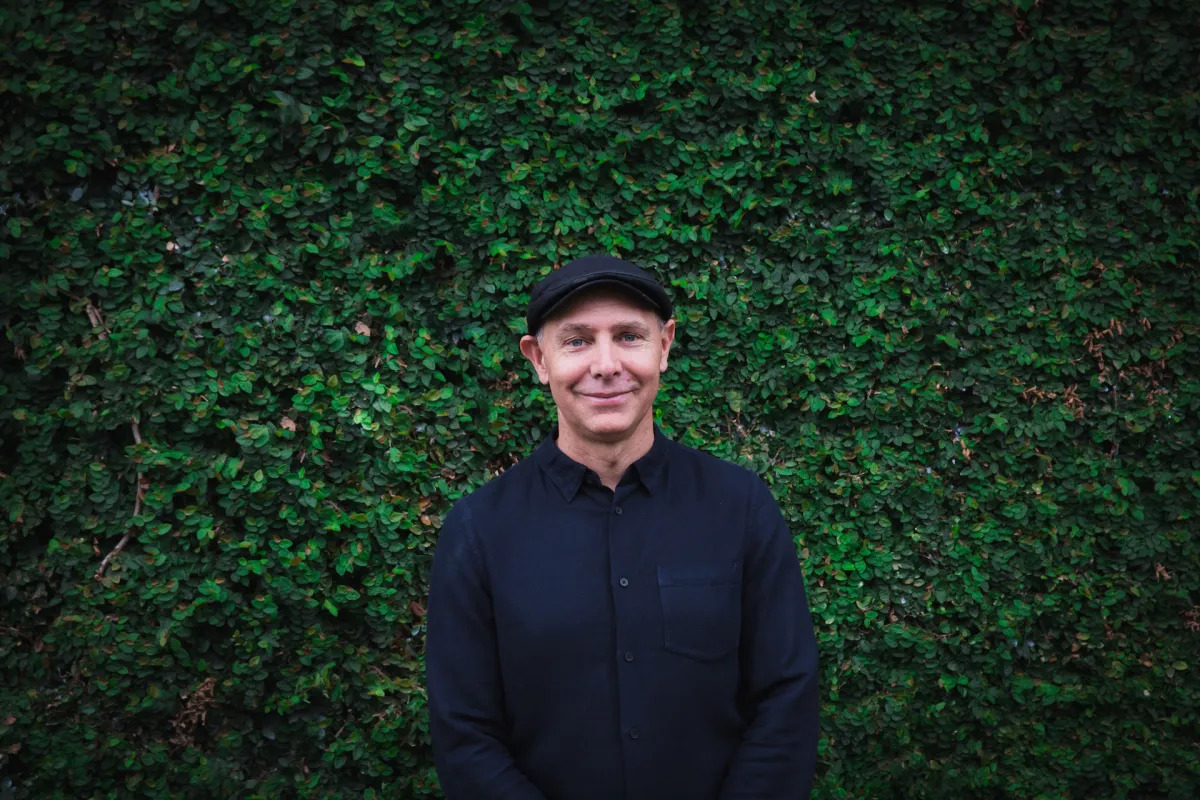
When I first connected with Italian architect Nicola Preti in his hometown of Verona, I knew I was speaking with someone who had not only mastered his craft but had done so by walking a long and unconventional road. However, what impressed me the most was the crystal clarity and conviction with which he has reshaped an entire field.
Today, Nicola is widely recognised as the foremost expert in Italy on natural-material construction and bioarchitecture, yet his journey began far from the spotlight, with no established guidelines, no supply chains, no university courses, and very little support from the traditional construction world.
He describes those early days with a kind of amused patience. More than a decade ago, when he first mentioned straw-bale construction, people looked at him as if he were proposing something fragile or temporary. The assumption was that a “real house” had to be made of concrete or brick. As he told me, “Clients investing hundreds of thousands of euro don’t want fragile-looking buildings. They want performance.” That sentence stayed with me, because it captures the quiet revolution that underpins his entire approach. Nicola never set out to sell an idea of natural living. He set out to prove, with engineering and precision, that nature and performance can be stronger together.
Nicola’s turning point came in 2012, when he spent time in the Netherlands, observing how design, communication and construction were treated as a unified discipline. Dutch students were taught not only how to design, but how to explain and articulate value. Italian practice, in his experience, lacked that essential step.
“If you do not communicate your work, it dies with you,” he said. That mindset shaped his next decade. He returned home determined to merge traditional materials with modern industrial processes, and he committed to constant advocating so people could see these buildings in action and follow his journey. What began small has evolved into national leadership. Today he is called to conferences, consulted by colleagues, and his projects are studied and imitated beyond Italy.
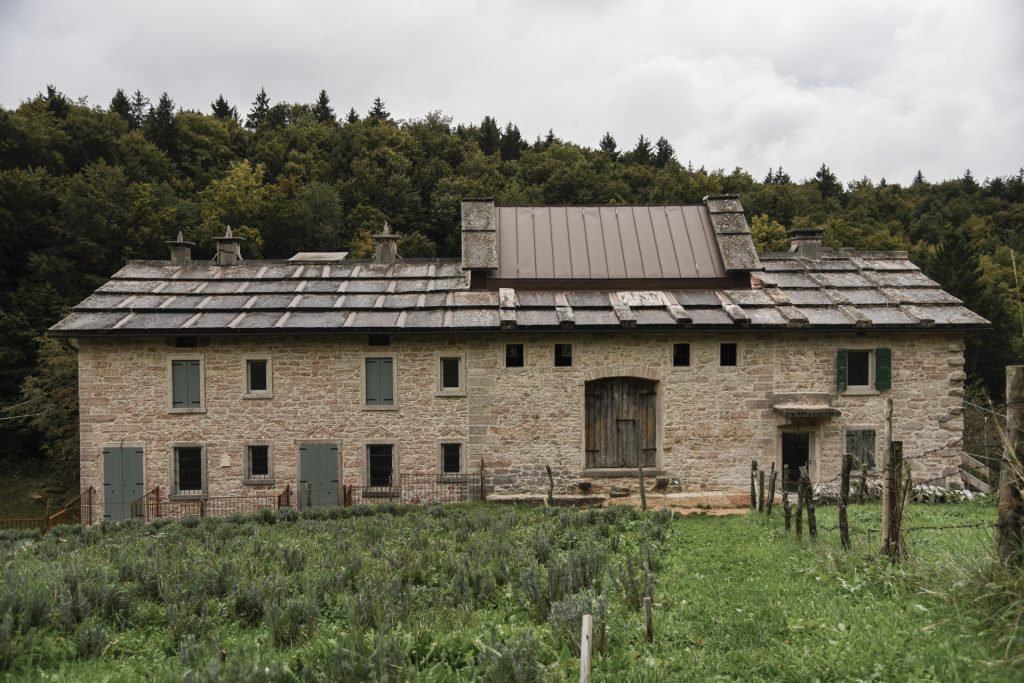
What truly fascinated me in our conversation is the way he redefines what we consider “modern construction”. For Nicola, the future does not belong to robots or futuristic composites, but to an intelligent use of natural materials combined with prefabrication. Entire wall panels are built in controlled workshop environments, complete with timber structure, straw insulation and clay surfaces. These are delivered to site and assembled with remarkable speed and accuracy. “We assemble a villa in one week,” he said matter-of-factly. “This is not a small improvement. It is a completely different world.”
It is impossible to hear him describe these systems without imagining how they could transform building practices here in Australia. Rapid assembly, predictable costs, reduced onsite errors and extraordinary thermal performance are all outcomes that resonate strongly in a country wrestling with housing shortages, skilled-trade constraints, and climatic extremes.
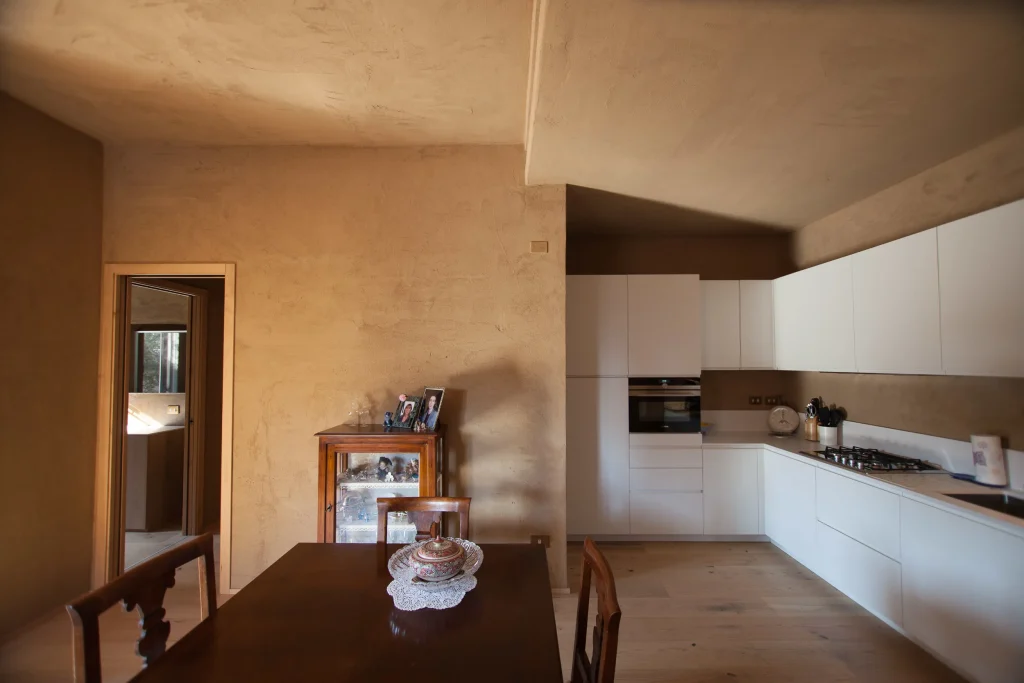
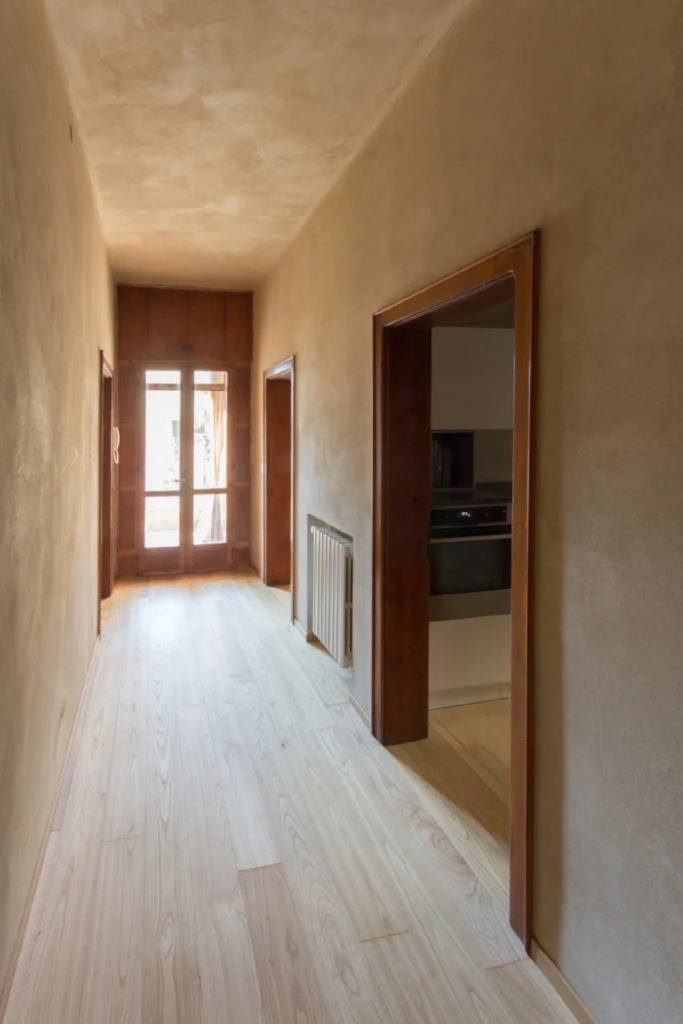
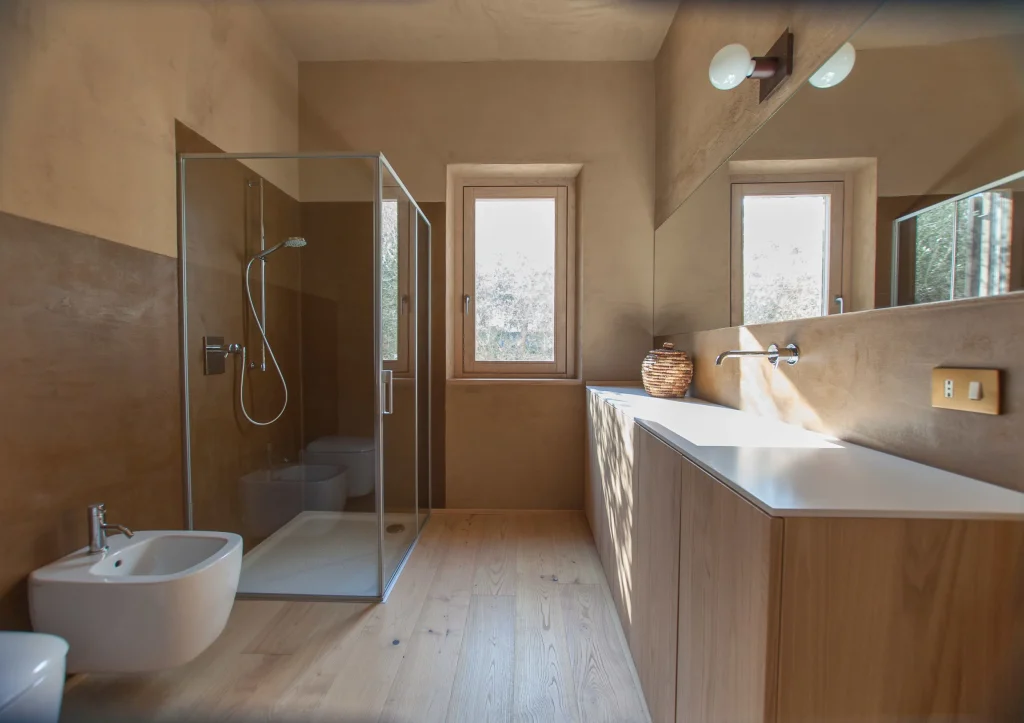
Throughout the interview, one theme kept coming back: the priority is human wellbeing. Nicola spoke at length about the effects his homes have on people with asthma, allergies or sensitivities of various nature. Straw insulation combined with clay plaster creates a naturally balanced indoor climate that regulates humidity, improves acoustic comfort and eliminates the “heavy air” sensation so common in tightly sealed modern homes. In his words, “I have never had a client tell me they are cold” The materials are not chosen for nostalgia, but for measurable performance: zero VOCs (mold is a massive issue in Northern Italy’s high-humidity climate), high breathability, and excellent thermal mass.
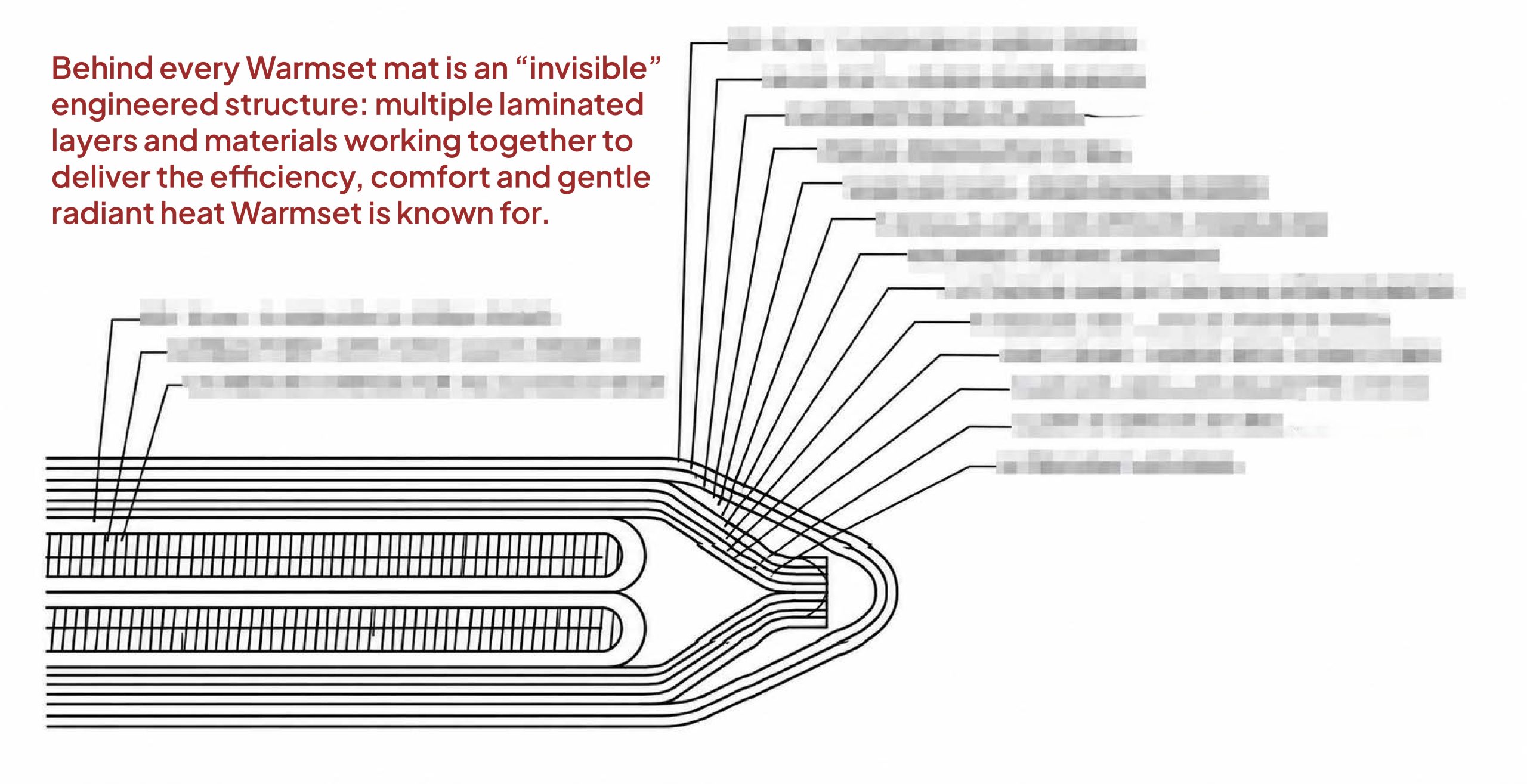
At one point, our conversation crossed into familiar territory for me. What does a heating system look like in such a building? Nicola smiled and explained that he uses Warmset exclusively – no other technology. He places the far-infrared elements in specific points of the clay-coated walls and the synergy between the FIR technology and the clay mass produces a powerful yet gentle, even warmth that users describe as deep comfort rather than surface heat. “People are amazed that with such a non-intrusive heating they feel so well,” he said. It was validating, not only as a distributor of Warmset in Australia and New Zealand, but as someone who believes comfort should be holistic, not mechanical (I never hide how much I dislike forced air heating!!).
We eventually moved to an old topic that Australia is still racing towards: electrification. Nicola’s answer was simple: every new home is already all-electric (and it must be). Photovoltaics are standard. Gas is gone. Energy autonomy is the expected outcome, not an aspiration. “For new houses, this is the norm,” he said. Italy’s push for energy independence has accelerated this shift, but what struck me most is how naturally his construction philosophy accommodates it. Highly insulated envelopes, airtight detailing, low heating demand and simple mechanical systems create energy profiles that Australia has been striving to reach.
Toward the end of the interview, I finally asked the question that mattered most to our Australian audience: can this approach be transferred here? Could our builders, suppliers and architects adopt similar methods? I mentioned our climate challenges: fires, floods.
Nicola didn’t hesitate. “Changing methods or materials is easy,” he said. “It is the mindset that blocks progress. Once the mindset shifts, learning the system is simple.”
It’s almost comforting to see that every trailblazer I come across has experienced the same obstacles that I am experiencing. I mentioned how challenging it is to talk to architects and get them to learn about the benefits of Warmset FIR underfloor heating over hydronic. His advice is to focus less on technological disruption and more on visual evidence and storytelling. People must see the results. In his context, they must believe that natural materials are not a compromise, but an upgrade. In Italy, he posts photos and videos of every site visit. He teaches workshops for engineers and carpenters. He shows the failures of traditional methods and the successes of new ones. Over time, this consistency has created a cultural shift.
When I asked what value will matter most in the next decade of his work, he answered without pause: “It must be a house for everyone.” Not an elite experiment. Not a boutique luxury trend. A democratic architecture that uses simple materials, assembled with intelligence, to deliver health, comfort and resilience for ordinary families.
Australia has much to gain from this mindset. Straw and clay may not become mainstream tomorrow, but the principles behind Nicola’s success absolutely can: process intelligence, trust in natural materials, electrification as foundation rather than add-on, and a design culture that sees housing as a living system rather than a commodity.
Listening to him, I realised that the real bridge between Italy and Australia is not climate, regulation or technology. It is courage and creativity. Courage to rethink how homes are made, to challenge our own thinking and to prioritise people over status quo. Courage to be intellectually creative and build the future before others see it.
What Nicola teaches us is that a building is not a static box but a living system. We do not simply construct it. In this, the worlds of bioarchitecture and biophilic design meet. Both invite us to craft spaces that breathe, restore, and respond to people and climate.
Giovanna Toldi, Managing Director, Warmset Australia
Nicola Preti: www.nicolapreti.it